Introduction
The rapid adoption of artificial intelligence in enterprises has sparked debate about its most beneficial application. For many, generative AI systems like ChatGPT and Bard have shown promise in creating content and summarized ideas. Yet, a new wave of innovation points toward agentic AI—autonomous systems designed to make decisions and execute complex tasks. For leaders at the helm of large-scale operational teams, the difference between these two AI paradigms could reshape their productivity landscape.
While generative AI generates text or content, agentic AI is about action. Think of it as the brain behind advanced orchestration hubs, bridging the gap between siloed enterprise tools and creating governed actions to reduce digital friction. This post unpacks the distinction, providing actionable insights for senior operators to revolutionize how work gets done at scale.
Key Differences Between Generative AI and Agentic AI
At first glance, generative AI and agentic AI may appear similar—they’re both powered by advanced machine learning, and both offer scalability and efficiency. However, their core purposes and impacts differ starkly:
- Output vs. Action: Generative AI is designed to create. It crafts written content, images, or code but doesn’t independently decide or execute actions. Agentic AI, on the other hand, is action-oriented, orchestrating workflows across CRMs, communication tools, and project management systems.
- Complexity in Execution: Where generative AI ends with producing results, agentic AI begins. It leverages APIs and process integration to execute governed tasks across platforms, eliminating the need for human middleware to connect siloed tools.
- Governance and Autonomy: Agentic AI operates within predefined rules and limits, ensuring every action adheres to organizational compliance and governance requirements.
This operational intelligence significantly improves interdepartmental workflows and minimizes what we call the ‘toggle tax’—the inefficiency of switching between fragmented applications.
How Orchestration Hubs Unlock Productivity
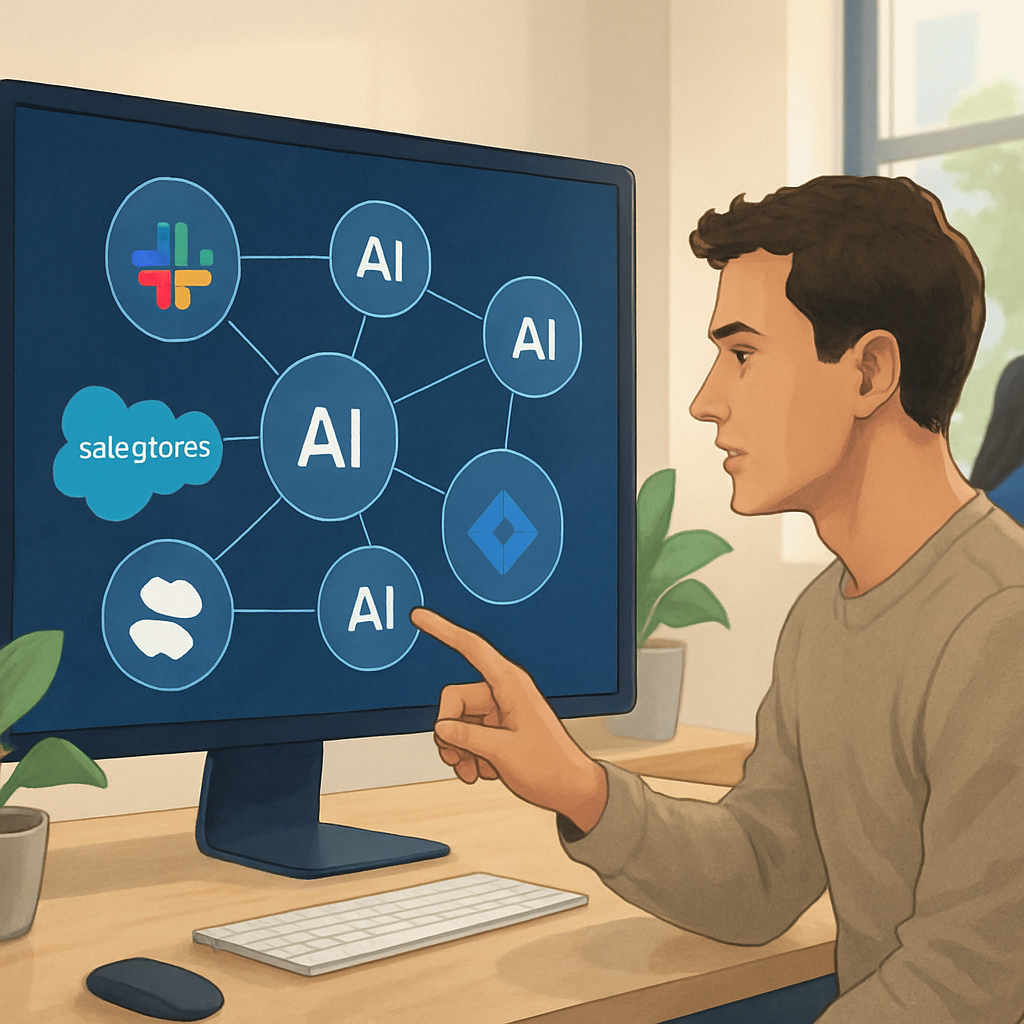
One of the most profound applications of agentic AI lies in orchestration hubs. These platforms act as nerve centers for enterprise operations, intelligently integrating tools like Salesforce, Slack, Greenhouse, and Jira:
- Streamlining Actions: For example, an orchestration hub could autonomously update a lead status in Salesforce when a round of email correspondence is closed in Outlook, saving significant manual effort.
- Reducing Digital Friction: By breaking down silos, agentic AI ensures that engineering, marketing, and sales teams aren’t stuck managing separate tools to achieve the same goal.
- Governed Autonomy: Unlike generic AI tools that create content, agentic AI operates within the framework of secure permissions, ensuring compliance while keeping workflows seamless.
Real-World Applications of Agentic AI
Consider an HR team struggling to coordinate between an applicant tracking system (ATS) like Greenhouse and team calendars in Outlook. Generative AI might write a beautifully worded interview schedule reminder, but it’s agentic AI through an orchestration hub that automates the entire process of scheduling, notifying stakeholders, and recording insights post-meeting.
Similarly, in sales, agentic AI can move beyond marketing emails or leads prioritization (a typical capability of generative AI tools). It can dynamically read engagement data in Slack, update CRM details automatically, and even trigger compliance tasks to finalize contracts.
Conclusion
For enterprises navigating the overwhelming complexities of digital transformation, the leap from generative AI to agentic AI represents a pivotal shift. While the former has its place in enhancing creativity and communication, it cannot match the decision-driven, actionable power of agentic systems. By adopting orchestration hubs powered by agentic AI, senior operators can dismantle operational silos, eliminate digital friction, and redirect their workforce from mundane tasks toward high-value strategic initiatives.
There’s no doubt—the future of enterprise-scale productivity lies in AI that goes beyond static outputs and becomes a fully governed, action-oriented partner in your operations.
Leave a Reply