Introduction
The wave of digital transformation continues to reshape enterprises. Yet, despite staggering investments in automation and AI, many enterprises are drowning in fragmented systems, requiring ‘human middleware’ to connect digital dots. It’s time to rethink how AI operates in your organization. At the heart of this conversation is the distinction between Generative AI—the flashy, text-based solutions that create draft content—and Agentic AI: enterprise-first technology designed to execute governed actions and drive tangible outcomes via tool orchestration.
What Is Generative AI? Its Strengths and Operational Limitations
Generative AI has been the darling of the AI world, renowned for generating human-like content through large language models (LLMs). Tools like ChatGPT represent its potential—summarizing reports, translating text, and drafting emails. However, generative tools face core operational limitations for enterprises:
- Static Creation: Generative AI produces insights but does not act. For example, it can suggest a lead sorting strategy but won’t integrate with your Salesforce to update CRM records.
- Governance Blind Spots: Enterprise leaders often struggle with how these solutions ensure compliance or align with data security regulations.
- Standalone Use: Generative AI often operates in isolated silos, requiring manual intervention to act on outputs.
This is where Agentic AI steps up.
The Game-Changer: What Makes Agentic AI Different
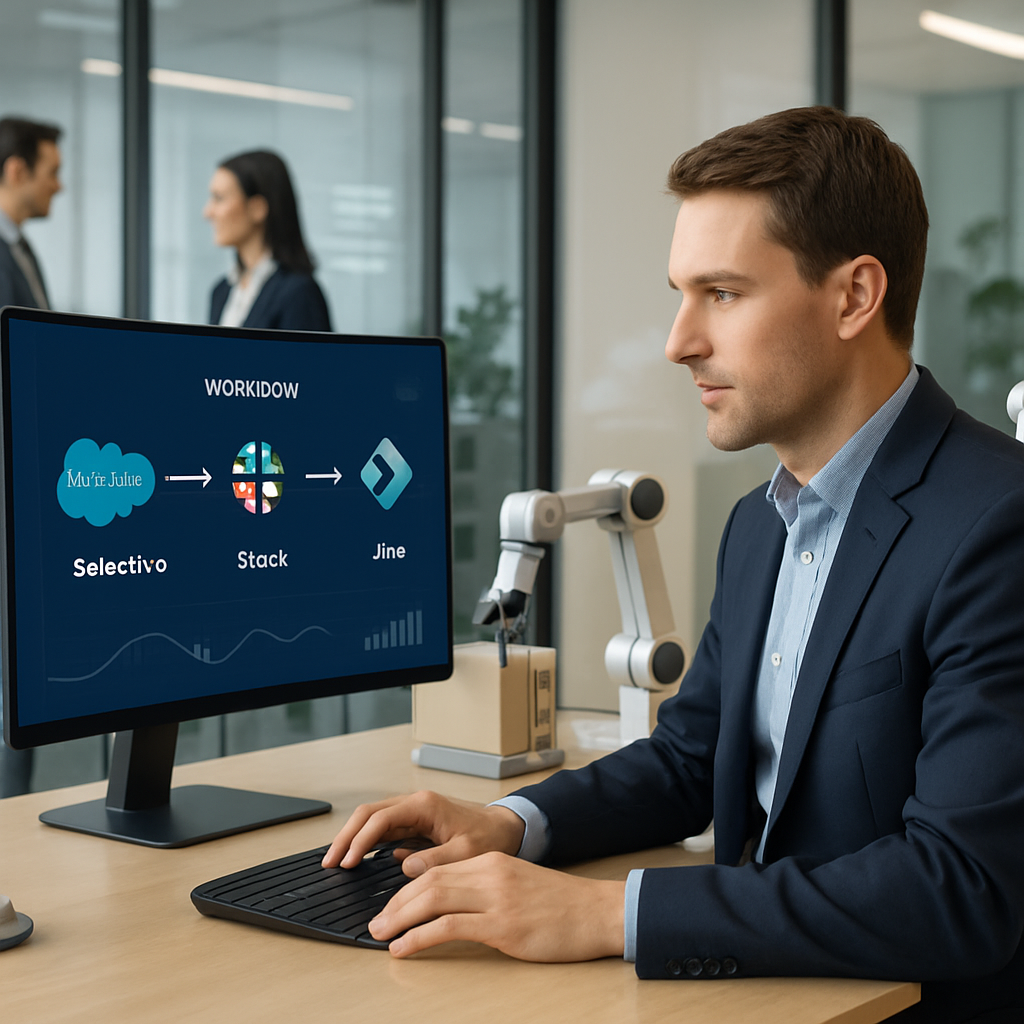
Unlike generative AI, Agentic AI doesn’t just generate insights. It represents intelligent enterprise agents designed for action, executing orchestrated, governed workflows across your tech stack.
Core capabilities of Agentic AI include:
- Execution Over Generation: Agentic AI integrates directly with enterprise tools, such as Slack, Jira, and Salesforce, to automate workflows and take governed actions without human intervention.
- Governance-First Approach: It ensures compliance through designed guardrails, offering decision auditability and enforcing standards for data use and actions.
- Contextual Orchestration: Acting as an orchestration hub, it connects siloed systems and eliminates the ‘toggle tax’ of constant context switching.
Simply put, Agentic AI enables enterprises to move beyond static AI chats to actionable intelligence. Think of it as combining the creativity of generative tools with the precision and action-oriented intelligence of autonomous agents.
Real-World Applications of Autonomous Enterprise Agents
Enterprise leaders can transform operations with Agentic AI. Examples include:
- Salesforce Automation: Automatically qualify leads, populate CRM records, and trigger follow-up actions through AI-driven workflows.
- IT Operations: Detect system alerts, create tickets in Jira, and escalate to the appropriate person—all within governed frameworks.
- HR Recruitment: Automate interview scheduling and candidate feedback collection across platforms like Greenhouse or LinkedIn.
Building For the Future with Orchestration Hubs
The future of enterprise efficiency rests on an approach that centralizes tools and workflows. Moodbit’s Agentic AI-powered orchestration hub eliminates fragmentation, letting your tech stack perform harmoniously. It transforms chaotic multi-tool landscapes into a unified, governed digital ecosystem. The result? Increased productivity, reduced digital friction, and decisive operational gains.
Conclusion
For COOs, CIOs, and CFOs seeking transformative ROI on their AI initiatives, the leap from generative to agentic AI marks a pivotal evolution. With governed actions, tool orchestration, and autonomous agents, Moodbit stands ready to redefine enterprise operations. The question is: Are you ready to move beyond the limits of static AI and embrace an actionable, agentic future?
Leave a Reply