Introduction
The relentless march of digital transformation has brought enterprises face-to-face with a new frontier: the shift from automation to autonomy. The buzz around Generative AI, chatbots, and task automation has been rapidly eclipsed by the emergence of a more transformative force—Agentic Artificial Intelligence (AI). At the heart of this evolution lies the concept of orchestration hubs, designed to eliminate fragmentation, minimize effort duplication, and maximize operational efficiency. For COOs, CIOs, and CFOs, understanding and implementing these technologies isn’t optional; it’s mandatory for survival and success in the new workspace.
The Problem: Context Switching, Toggle Tax, and Human Middleware
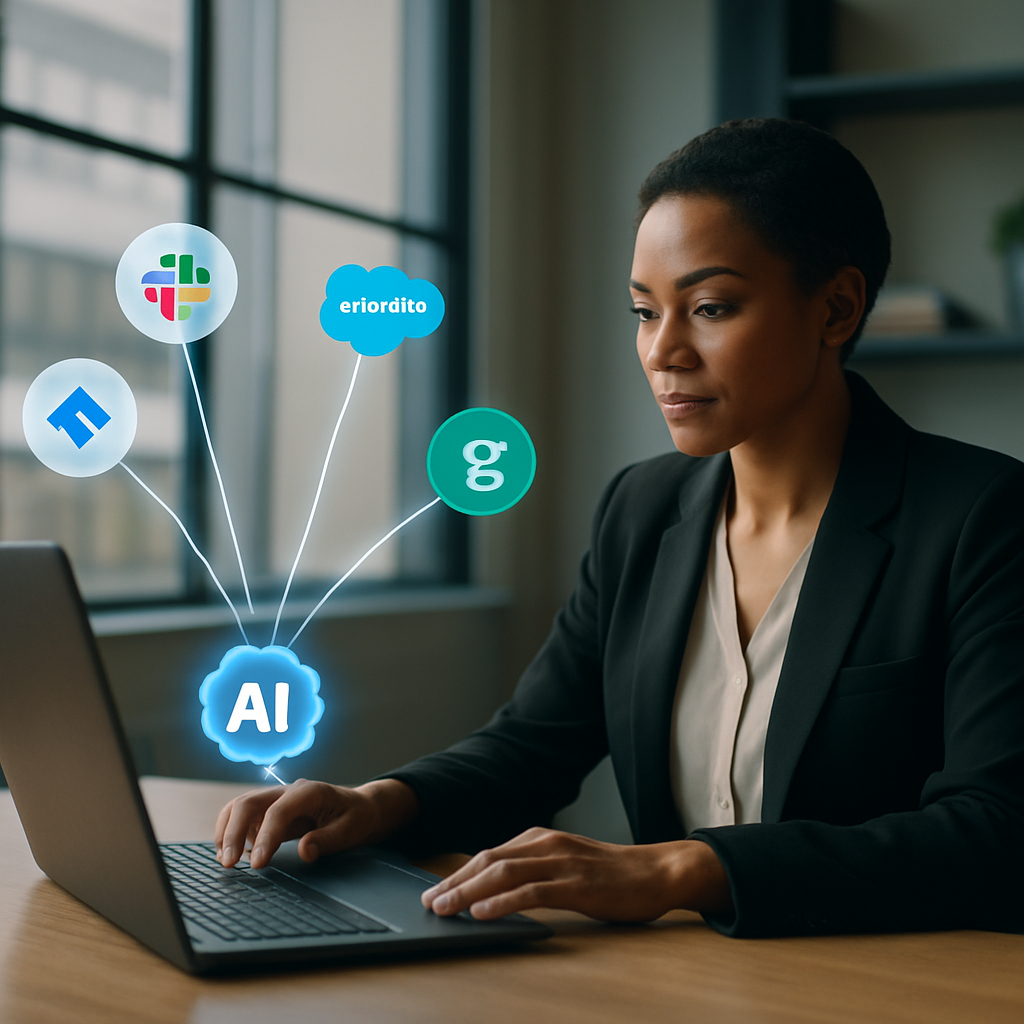
Today’s enterprises are plagued by operational inefficiencies commonly known as the “toggle tax.” Context switching between a barrage of fragmented apps—Slack, Salesforce, Jira, Greenhouse, and more—forces employees to spend precious hours coordinating rather than creating value. This complexity often turns competent managers and workers into “human middleware,” manually bridging process gaps and reconciling misaligned workflows. The result? Diminished ROI, burnout, and stifled innovation.
What Sets Agentic AI Apart?
Unlike generic chatbots or traditional AI tools, Agentic AI goes beyond simply generating text or responding to queries. It autonomously executes complex workflows across interconnected systems. Think of Agentic AI as having digital “co-workers” capable of performing governed actions within clearly-defined boundaries. The emphasis on governance ensures actions align with enterprise rules and compliance.
Furthermore, orchestration hubs act as the nerve center of enterprise operations, connecting individual systems into a unified whole. Instead of toggling between disconnected apps and performing repetitive tasks manually, leaders can orchestrate seamless workstreams backed by AI-driven precision.
Practical Use Cases Across Departments
- Human Resources: In recruitment, Agentic AI can integrate Greenhouse, Slack, and Gmail, automating candidate outreach, interview scheduling, and feedback collection—all while ensuring a consistent candidate experience.
- Sales Operations: By integrating Salesforce and outreach platforms, sales teams can automate lead scoring, outreach sequencing, and post-sale follow-ups, reducing sales cycle time and driving revenue growth.
- Engineering: For VP-level engineering leaders, orchestration hubs streamline cross-tool workflows, connecting Jira, GitHub, and Slack for improved sprint planning, code deployment tracking, and team communication.
- Finance: CFOs benefit from automated expense approvals and real-time budget analytics, reducing manual oversight and ensuring financial discipline across departments.
The Way Forward: Building the Autonomous Enterprise
The shift to Agentic AI and orchestration-first infrastructure is not just about adopting new tools; it’s a complete redesign of how work gets done. Modern leaders must prioritize this transformation by selecting platforms like Moodbit that offer governed action, seamless scalability, and measurable ROI.
It’s no longer sufficient to automate siloed tasks. The future belongs to autonomous systems that think, plan, and execute. For enterprises navigating this adoption curve, the rewards range from reduced costs to game-changing agility. Whether your focus is talent, sales, engineering, or finance, the journey starts today.
Conclusion
The age of fragmented systems and human middleware is ending. Agentic AI and orchestration hubs represent the blueprint for enterprise efficiency, capable of achieving sustainable scalability and competitive advantage. For COOs, CIOs, and CFOs aiming to future-proof their operations, the decisive move is clear: embrace the autonomous enterprise, or risk getting left behind.
Leave a Reply